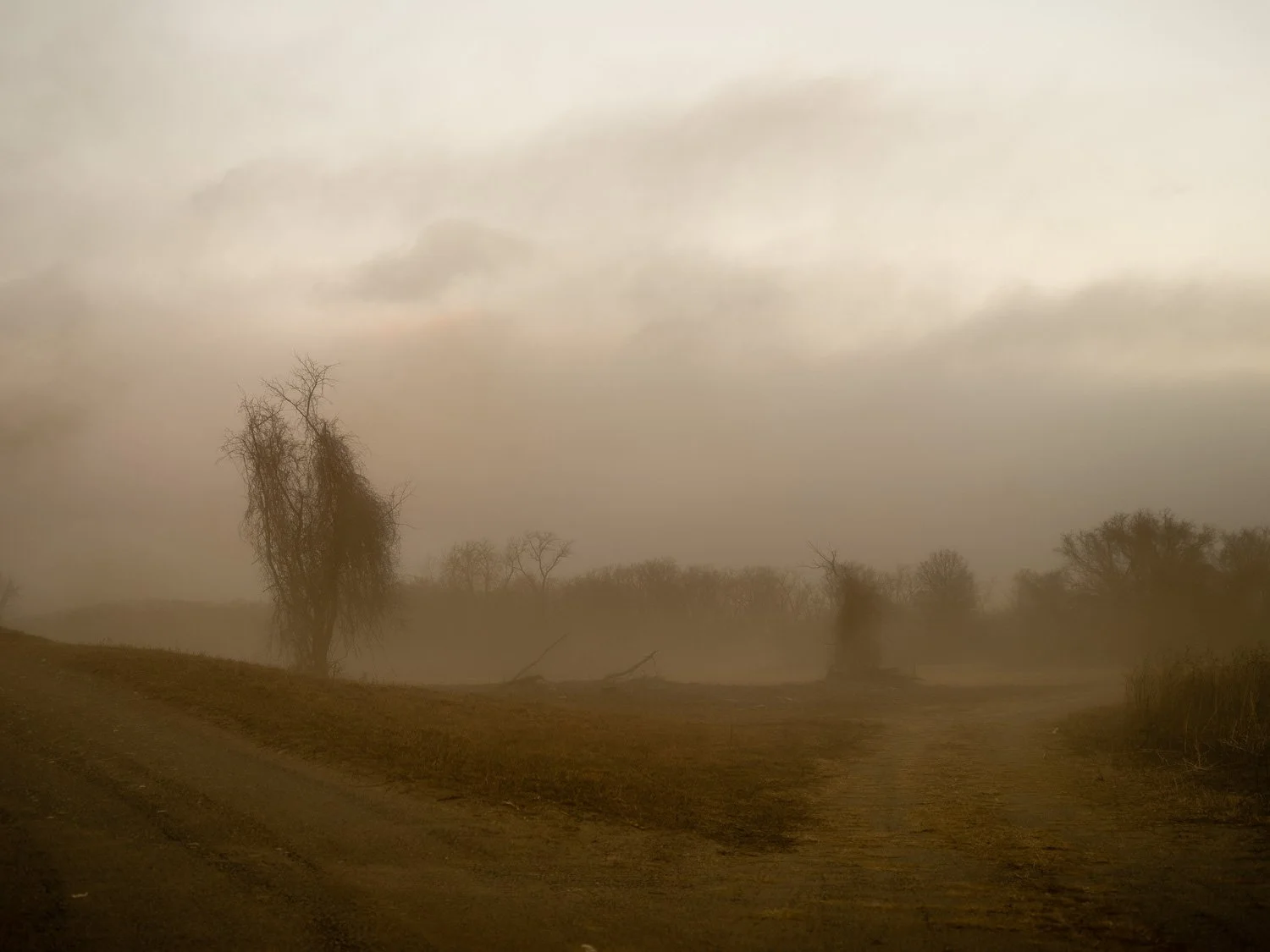
TRACES
A vestige, a hint, a suggestion of human existence, and human absence. Traces explores themes of loss and impermanence in a small northeastern town whose original inhabitants extend far beyond the Europeans who settled here more than three-hundred and fifty years ago, and whose presence can still be felt in the quieter moments of each day.

THE CORN THIEVES
Growing up in Canada, the United States seemed to me a mythic place—undoubtedly the byproduct of too much television. I remember the first time I saw Americans in person, standing along the southern shore of the St. Lawrence river where my friend’s father had stopped to gas up his boat. Even at a distance they seemed larger than us Canadians somehow, and every bit as mythic as their TV counterparts.
I have now lived in the U.S. more than half my life; first as a student, and later as a naturalized citizen. Though the myths were easily debunked, there was still much to admire, and much to rail against, always. The magnanimous country I once envisioned has been capable of enormous cruelty dating back to its founding (and every era since). Still, there was always a measure of hope that things would get better, that the arc bent upwards, not down. These days things seem to be going backwards in fast motion, the gut punches to the country too numerous to list. As the current administration dismantles so much of what defines America, hope has turned to despair for many.
Although some of the images presented here date back two decades, this edit reflects my mindset in 2026; in some ways straightforward, and in some ways reflective of the ambiguity and confusion of this moment.
The working title, The Corn Thieves, derives from the book, The History of the State of New York (Vol I) in which a delegation of Montauk Indians ask a delegation of settlers, “Are you our friends? You are only corn-thieves.”
RHODODENDRON
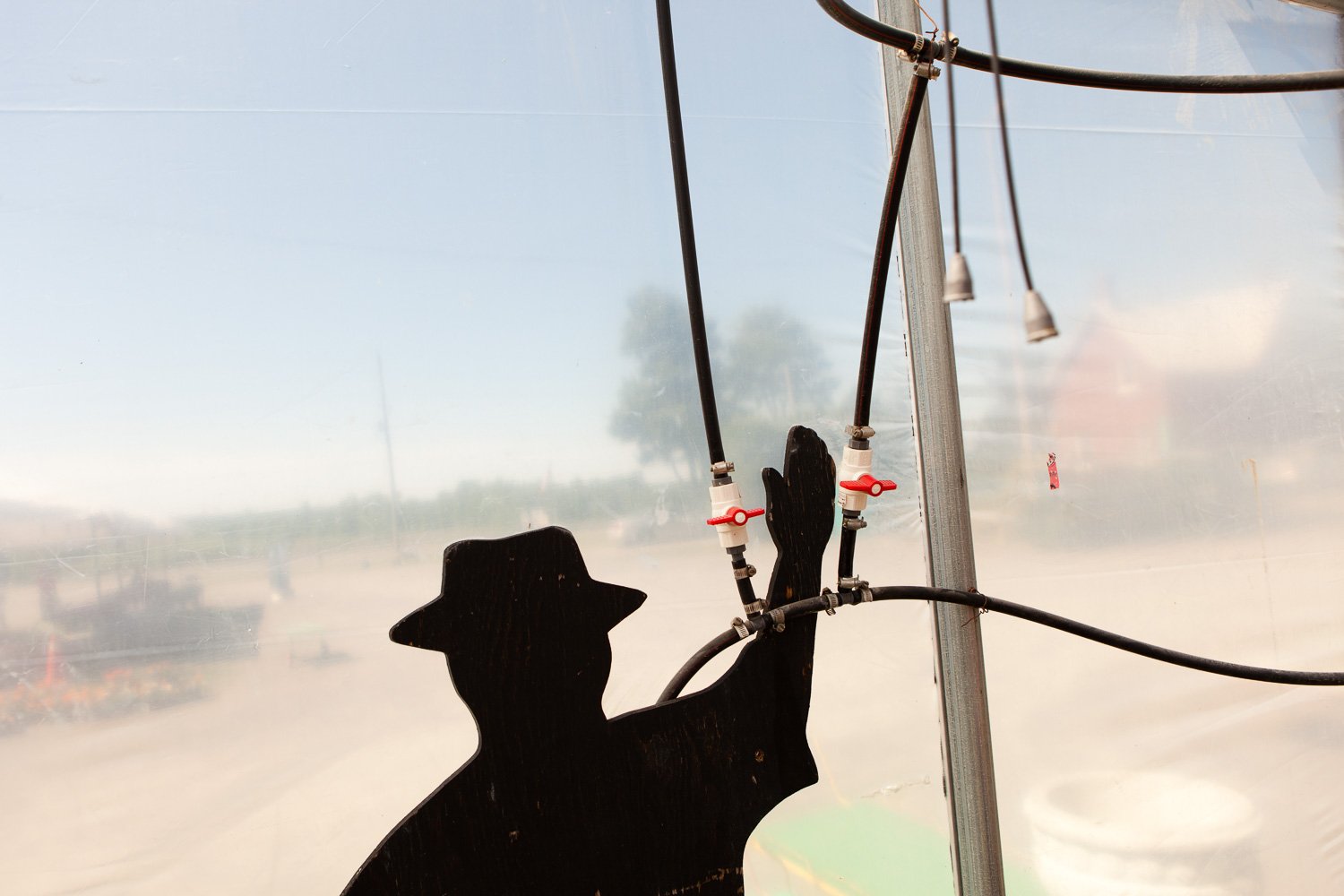
OTTAWA
"If this is dying, it's the shits."
In spite of everything my father had not lost his sense of humor. The fact is, he was dying. Cancer. But he was also still living. Home early from work—a clear sign that something was wrong—he looked pale. We got him back in the car with less resistance than usual. "Your mother and brother sandbagged me when I got home and brought me in," he said to my brother at the hospital. He knew what the rest of us wouldn't admit; that if he went in, he probably wasn't coming out.
'Ottawa' was shot over several years during visits to my Canadian hometown. Knowing that my father's days were numbered, these trips were beyond bittersweet; filled with an appreciation for what is, yet flecked with a new brand of sadness. The images use symbols and metaphor to explore the dying process. From diagnoses and hospital procedures, to hope, acceptance, and ultimately grief, they represent the clumsy act of letting go.

BROOKLYN PATRIOTS
Brooklyn Patriots is a documentary work exploring the ever-tangled notion of patriotism in America. Set in the microcosm of Brooklyn, and begun on the first anniversary of 9-11, the photographs of flags, bumper stickers, murals and memorials invite viewers to ask themselves what patriotism means to them, and at what potential cost.
As a street photographer in post 9-11 New York, there was no getting around the flags, though not everyone rushed to hang one from their window, prompting this Canadian emigrant to wonder, “What is a patriot anyway?” From what I could tell, there are two basic camps of patriots in America: those who support the government “right or wrong,” and those only “when it deserves it.” Like many in the latter camp, I agreed with journalist Bill Moyers who wrote, “not every patriot thinks we should do to the people of Baghdad what Bin Laden did to us.” It’s tempting to think that hundreds of thousands of innocent Iraqis would still be alive today if not for the “with us or with the terrorists” rhetoric, stoking the patriotic fires. Thus, Brooklyn Patriots is my protest song; a warning of how blind allegiance to the government can lead to tragic consequences—not only for our own citizens, but for the rest of the world.